
Drill baby, drill
Written by Shabnam Ali
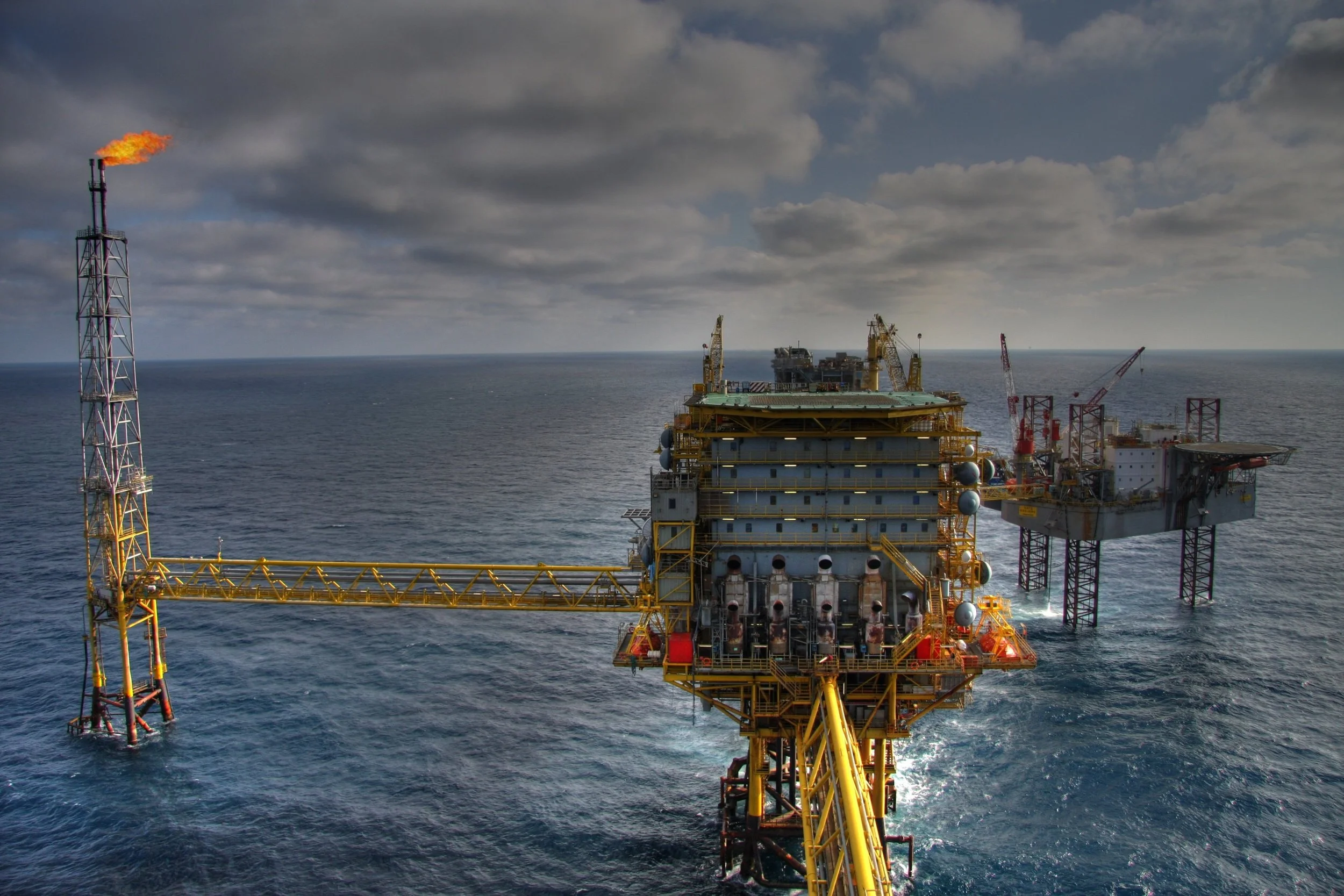
Our generation is witnessing an environmental demise. The North Sea, once untouched and teeming with marine life, was home to a rich and diverse ecosystem. The cold waters supported a variety of species and overall, the surrounding environment was thriving with lower emissions and better air quality.
The introduction of oil rigs and the accompanying noise, pollution and habitat disruption has drastically altered the delicate relationship between humans and the coastal environment, and now, the North Sea is running the risk of becoming an ecological disaster and an environmental graveyard.
Gas was first found in the North Sea in 1959. By the mid-1980s, there were over 100 oil-producing installations and millions of barrels were being produced a day. The Thatcher-led UK government oversaw the continued growth and control of the new resource, which helped the UK remain energy independent in the face of increased globalisation and resource scarcity. By the early 1990s, the UK had become a net exporter of oil and gas, which further increased national revenues and helped the country edge into the international fossil fuel market.
“However, these gains came at a cost. Pollutants and mining have had a direct and irreversible impact on marine life and human populations.”
The North Sea has housed several species over the years. Seals thrived in these waters, feeding on small fish such as herring. The clear water provided an ideal hunting ground, and the unpolluted shores allowed for healthy breeding, resting and feeding. Other species such as cod have been plentiful and crucial to the ecosystem and livelihoods of coastal populations. Fish was an essential resource for these populations, providing a rich food source during harsh winter seasons, and income, employment and economic livelihoods for fishing communities and shoreline towns, such as Grimsby.
The impact of drilling has been undeniable. A 2008 study that explored the impact of metal pollutants on mammals in the North Sea found that the creatures were ‘loaded with metal pollutants’ and that their immune systems were imbalanced, which may 'play a significant role in the incidence of infectious diseases in marine mammals', and negatively affect fertility and mortality. The decline in the marine ecosystem has impacted the wider food chain, and, in addition to widespread overfishing, decreased the quantity and quality of fish stocks. Grimsby, once a thriving seaside town, experienced rapid economic decline following the waning of its fishing industry. Fiscal stagnation led to a sustained period of social deprivation and, in 2024, Grimsby was rated ‘the worst major town in Lincolnshire for criminal damage and arson, with 125 crimes reported and a crime rate of 1.4 per 1000 daytime population’.
The scope of impact also extends further than the UK.
“While the mass production of oil and gas fattened pockets across the country, it also made the UK a key contributor to the overall global environmental crisis.”
In 1990, UK emissions peaked and stood at 794m tonnes of carbon dioxide equivalent, a rate so large that it served as the baseline for the UK’s existing Net Zero target. Although emissions have declined since this peak, the UK has rarely, if ever, been on target to meet the Net Zero deadline, currently scheduled in for 2050.
Indeed, drilling will soon be on the rise. In early 2024, the North Sea Transition Authority reported that 24 new licences had been issued to Shell, Equinor, British Petroleum, Total and NEO Energy, among others. This is on top of a further 100 licenses that had been granted under previous Conservative administrations, ostentatiously done so in the name of economic and labour security.
While it could be argued that the North Sea is ‘out of the way’ for most, the effects of increased drilling will impact daily life across the UK. The North Sea has a history of oil spills, and new exploration increases the likelihood of such accidents, which have devastating consequences for marine life and drinking water. In 2023, Unearthed reported that ‘more than half of oil accidentally spilled in UK waters reached marine protected areas’.
From 2014–24, operators reported ‘551 accidental oil releases’, with the worst example occurring between 2019–20, when Altera Infrastructure spilled ‘approximately 238 tonnes of diesel directly into the Faroe-Shetland Sponge Belt’—a conservation marine protected area. Spillages and the drilling process also leads to waste biproduct, such as mercury, lead and sulphate, to enter the marine environment, where heavy toxins can contaminate the freshwater cycle. Chemicals can be ingested directly by marine organisms, or contaminate local rivers and reservoirs, if the proper environmental safeguards aren't in place.
Deirdre Michie, the chief executive of Oil and Gas UK, stated, ‘I guess we have an addiction to oil and gas in our society’ and this has never rung louder than it does today. Despite the danger, expansive drilling and the search for new sites remains as competitive as ever.
Yes, capitalism demands that we satisfy business needs and the demands of the UK population, but many parts of the ocean remain largely unexplored and hold mysteries that are critical to both scientific understanding and environmental health. Without these fragile ecosystems, biodiversity and the ecological function that it provides will continue to plummet.
Writing this, I am reminded of the 2023 Titan submersible disaster. The depths are unpredictable and perilous, and while humans can feel as if we are in control, such sentiments are often an illusion, put in place to help us sleep a bit easier.
The desire to explore beyond our means in the name of economic success still hold weight once our atmosphere acidifies and our drinking water is contaminated? Or will humanity's relentless pursuit of progress find its destiny written in the barren oceans of a planet we once called home?