
Two steps of resistance
Written by Jess Pannese
Illustrations by @georgiabrownillustration
The 1960s, for much of the world, was a turbulent time for politics and culture. Art became a weapon of resistance against institutional corruption and discrimination, with music developing as a key medium for activists to communicate and share their message with audiences. Nowhere was this more evident than Brazil.
In 1964, a coup d’etat, or golpe de estado, backed by the US government, established a right-wing military dictatorship that would go on to last for 21 years. The regime was characterised by authoritarianism and censorship, which created a widespread longing for resistance and freedom. This energy led to a boom in the local cultural arts, as communities sought new ways to express their disdain for political corruption.
Samba, Brazil’s most quintessential music genre, belied messages of political protest in its infectious rhythmic pulse. The genre, which originated in Afro-Brazilian communities of Bahia, expressed the increasingly vocal identity of urbanised Black communities and built on the legacy of a racial democracy in Brazil. During the 1930s dictatorship of General Getulio, Samba music gave crowds the opportunity to express dissent through masked lyrics while appearing to obey censorship laws. These Samba carnivals were not only a time for artistic expression, collaboration and movement, but also for releasing the grievances that had built up from social disparities. Samba became a movement of the people to rally against an oppressive political class and, on more of a fundamental level, to savour moments of love in times of difficulty.
“Whatever it is, the way you tell your story online can make all the difference.”
The coup d’etat aimed to censor material that went against moral e bons costumes (morality and good manners). Armed forces used violence and torture to suppress the opposition, and music as an art form was targeted heavily via the political control of its production. Many musicians were exiled in an attempt to silence opposing voices and manage the state’s reputation.
In response, iterations of Samba that took on faster rhythms for carnival popularised the genre, while artists like Gilberto Gil and Chico Buarque incorporated political sentiments through lyrical references. Buarque’s Meu Caro Amigo was written as a rhythmic ode to Augusto Boal, who was exiled in Portugal for radical leftist activism. Calice uses wordplay that reflects censorship (sounds like cale-se - shut up).
However, as it always does, hope for a better future among the people persevered. The 1988 Mangueira Samba School’s carnival, Kizomba, Festa da Raca (Festival of Race), celebrated the 100th anniversary of the abolition of slavery in Brazil, and challenged how far the nation had come in enacting real change.
Samba, since its conception, has held social justice in its fabric. Its association with the carnival and jam sessions that have survived years of dictatorship symbolises the perseverance of its community in the face of corruption. Music, at its roots, is a vehicle of resistance.
Bossa Nova, more musically complex but also with a somewhat slower pace, is an iteration of Samba that developed from a merging of American jazz and classic Bahian Samba. Artists like Joao Gilberto and Tom Jobim pioneered this movement of ‘new wave’ music that embodied a drive for modernisation, both politically and culturally, that, unlike Samba, came largely from the professionalised middle class. Whereas its predecessor tended to focus on community and togetherness, Bossa Nova introduced the artistic expression of individuality. The Girl from Ipanema - the genre’s most famous song - represents Rio de Janeiro as idyllic, encompassing a form of aural resistance.
Tropicalia, born from the combination of traditional Brazilian rhythms and new foreign sounds, became known as the divisive music genre that symbolised the countercultural movements sweeping the world during the 1960s. Fronted by the likes of the Beatles and the Rolling Stones, musical activism with an anti-war sentiment reached an all-time high. For example, Caetono Veloso, titled one of his songs Il est interdit d’interdire’ (in Portuguese E Proibido Proibir or ‘it’s forbidden to forbid’). Caetano, along with Gilberto Gil and Chico Buarque, produced music that skillfully navigated censorship laws and embraced cultural hybridity, all while offering forms of hidden resistance for the masses to engage with. Tropicalia, although controversial at the time for blending avant-garde influences with traditional Brazilian Samba, was bold in its resistance to the authoritarian nature of the military dictatorship. Through music, dancing and carnivals, artists powerfully took back the right to inspire change and to speak against institutions.
“Brazilian funk, or funk carioca, is an Afro-diasporic genre of electronic dance music that was born in 1980s favela parties in Rio de Janeiro. ”
It blends New York freestyle, Miami bass and Los Angeles electro into the funk parties that populate the favelas of Rio. Although more generally defined by its party anthems and explicit lyrics, the genre is a racial melting pot with working class roots and politically charged themes. In 1989, DJ Marlboro’s Funk Brasil album was released, and the combination of Miami bass with Afrobeats and Samba produced relentlessly percussive tracks with Portuguese lyrics. The high beat count per minute and lyrics that detailed life in the favelas became the rhythm and soul of Brazilian urban culture, and an outlet for the residents of spaces whose voices typically go unheard. While artists like Anitta have popularised the fast rhythm in the rest of the world as well as online, Baile Funk continues to be deeply rooted in favelas. It represents freedom, expression and unity within communities that are bonded through shared struggles.
By the 2000s, funk was popular and was being played in nightclubs, on radios and in dance academies. However, it had also been criminalised in the eyes of state institutions. The lyrical content of funk, which often discussed sex, sensuality, criminality and ostentation, led to the stigmatisation of the music and the term funkeiro becoming synonymous with ‘criminal’ in the media. Throughout the 1990s, bills in Rio de Janeiro were passed that allowed the investigation of funk performers and the banning of events. The media and politicians increasingly linked Baile funk parties to violence and drug trafficking, with laws forcing promoters to have military police guards at bailes and having written permission from the government to host events. The transformation of Rio ahead of the 2016 Olympics brought about policies of mass forced evictions, military occupation of favelas and the widespread intimidation of residents.
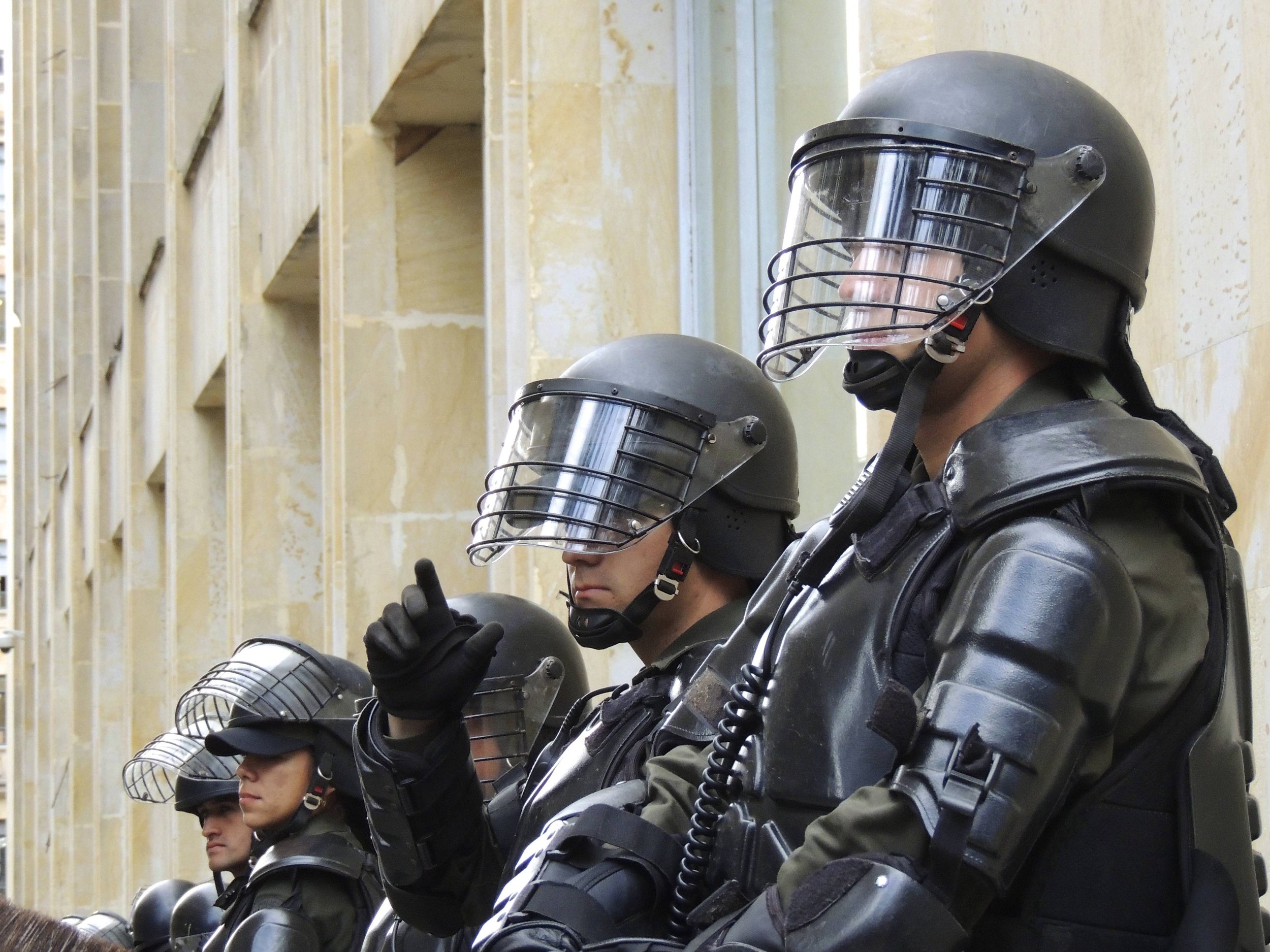
This established a time of upheaval and tension in favelas across Brazil. In 2019, militarised police officers ambushed the Baile da DZ7 funk street party in Sao Paulo. Chemical ammunition was used to disperse the crowd, and of the 5000 people at the party, 9 teenagers were killed. Police, using tear gas and rubber bullets, occupied all possible exits from the streets, claiming to be looking for armed drug traffickers. Also in 2019, DJ Rennan da Penha - a promoter of Baile de Gaiola and a prominent figure in the funk scene - was arrested. He was accused of acting as a ‘scout’ for drug traffickers. Rennan’s defence maintained his innocence in arguing that to live in the favela is to live alongside violence, and to survive this violence is to maintain relationships with those around you. This was a clear attempt from the state to further criminalise funk music and those associated with it.
Funk has, since its conception, been heavily policed and regulated. The obstacles its artists face reflect the same censorship that Samba artists in the 1960s battled against. If both genres’ parties and carnivals have faced militarised police, the question must be asked of how much has really changed. The constant criminalisation of music made by the working class in Brazil is an ever-present phenomenon. As DJ Marlboro said:
The problem in Brazil is that the political class is trying to take advantage of [us] - of a country that has been robbed ever since it was discovered. The more miserable the favela, the more violent it is. The more urbanised the favela - with more assistance, better schooling - the less violent it becomes, because people have perspective in life. And funk helps to give perspective. Funk can lead to social ascension.
The infectious rhythm of funk and the beats of Samba are both known to inspire dance. It is no surprise that these genres are world renowned for their popularity in parties and carnivals, and the togetherness that comes from these scenes does so in the face of oppression. The dancing body will always be engaged with individual liberation and an emancipated spirit, even in a context of political restraint, and the dance floor will forever remain a place of expression and freedom: dance can never be censored. Funk is the favela singing to the favela, and as long as there is rhythm and dance, there is resistance.